Photo: Luis Argenal
Ometepe Island
“I’m not a member of any political party, but I believe that the tourism development in our community has been beneficial for the island.”
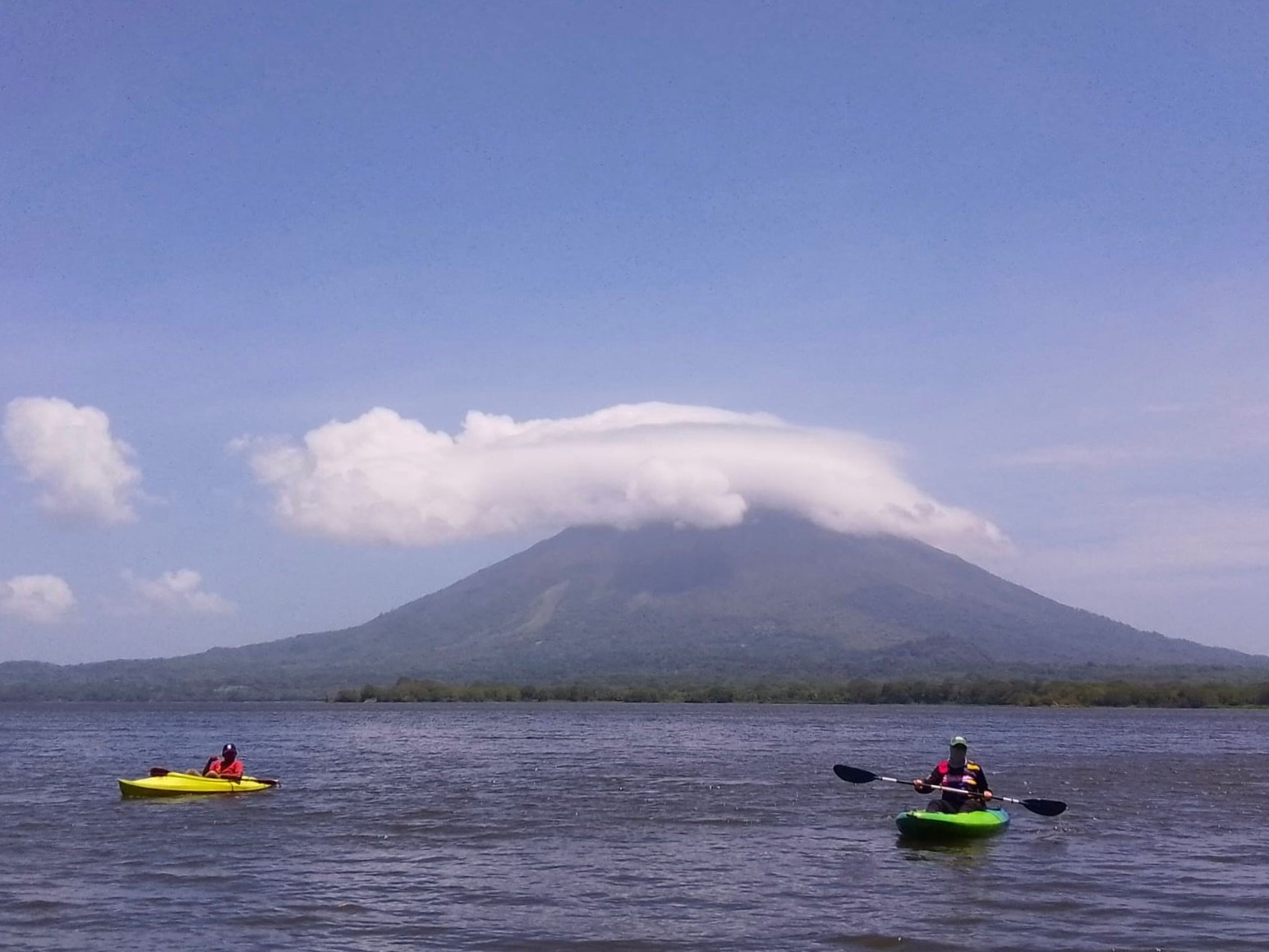
I’m standing with tour guide Luis Argeñal on the green folds of Concepción, looking out over a pastoral scene to the cloud-shrouded Maderas. We are on Ometepe Island, two volcanoes sticking up out of vast Lake Nicaragua.
My family has come to stay in the tiny hamlet of Balgüe where my husband and I visited twenty-five years ago when we first moved to Nicaragua. Back then, we had arrived by ferry, hitchhiking on the island where buses were scarce, walking along the dirt tracks with our backpacks to get to the only tourist lodgings on offer at the time, the sparse dorm rooms at Finca Magdalena coffee co-op.
A quarter of a century after that first arduous trip, we arrived on the island in style, zooming over paved roads in the dark and awoke to find that Balgüe is now a bustling village of dozens of neat concrete homes, every second one offering “cold coconuts,” “homemade ice cream” or “Mediterranean pizza.” With 93% percent of the tourism offerings on the island owned and operated by locals, it’s plain to see tangible benefits of tourism development for these rural families.
Tourism Transformed
How has so much changed for the small island so quickly?
Following the Sandinista’s return to government in 2007, Nicaragua adopted a National Development Plan and Fight Against Poverty and set out to make health care and education free, build hospitals, schools and roads, and extend the electrical grid and potable water service across the country. As a result, Nicaragua steadily began to recover from the devastation that structural readjustment had wrought during the 1990s and early 2000s
As part of this fight against poverty, tourism in Nicaragua was revolutionized through the development of a community-based tourism model which ensures that benefits reach local people, is culturally appropriate, and minimizes the environmental impact. Additionally, the National Institute of Tourism, INTUR, began offering more support to small businesses, including offering free trainings in everything from culinary courses to customer support.
By 2017, infrastructure improvements, high levels of trust in the military and police and steady GDP growth of 4-5% all resulted in stability and gave the country an excellent reputation for safety. Tourism was a booming industry supporting thousands of small family businesses across the country – Nicaragua had become one of the most popular destinations for savvy travelers in the Americas.
Tourism Tanked in 2018
Then, in April of 2018, there was a violent coup attempt, which was led and funded by the United States. Money later traced back to USAID and the National Endowment for Democracy was used to pay gangs to put up hundreds of roadblocks which paralyzed the country and became epicenters of violence. The roadblocks lasted for nearly three months, some 270 people were killed, and many more injured. The blow to the Nicaraguan economy was catastrophic: $24 billion in damages and 200,000 jobs were lost. The government calculated the loss to the economy as the equivalent of 52 Category Five hurricanes at once.
Ometepe Island was especially hard hit. The largest volcanic island inside a freshwater lake in the world and a designated UNESCO World Biodiversity Heritage site, Ometepe had managed to improve the lives of its 35,000 inhabitants through responsible development of rural tourism. When the island was suddenly cut off from the mainland by road blocks in 2018, however, tourism tanked.
“I’m a member of the first tour guide cooperative in the country,” Argeñal tells me. “In 2018 we had 65 members and we were all working full time.” Following the coup attempt, most of the members of the co-op – all fluent in English – left to find work outside the country.
“I was one of only 25 left on the island,” he tells me. “I almost emigrated too, but thanks to God I was able to make ends meet by growing coconuts and processing the oil.”
Over the past eight years, Nicaragua’s economy has slowly recovered from damage done by the attempted coup, with GDP growth returning to near pre-2018 levels. Although the tourism industry is improving, it has been slower to recover. One factor limiting tourism growth is that since 2018, the U.S. State Department has maintained a “Level 3: Reconsider Travel” advisory on Nicaragua as part of its hybrid warfare strategy against the country.
Today, like so many Nicaraguans I know, Argeñal makes ends meet through a combination of creative enterprises including the coconut oil business, managing an organic tobacco farm, guiding tourists and, just a few weeks ago, he opened up a new investment: a hotel in Moyogalpa near the ferry landing.
Ongoing Threats
For small tour operators like Argeñal, their families’ futures rely on Nicaragua’s continued stability – it’s unlikely their businesses would survive another attempted coup like in 2018. They know that even a perceived security threat can have an immediate effect on tourists visiting the country, which endangers their families’ livelihoods. This is why many in the tourism industry were spooked when Nicaragua hit international headlines recently.
It’s no secret that those behind the failed coup attempt, still supported and financed by the U.S., are constantly working to sow destabilization in Nicaragua. In the context of increased U.S. pressure and recent blatant interference in elections throughout Latin America and leaked audios from “Hondurasgate” revealing a larger propaganda machine working against progressive governments across the region, Nicaragua is taking steps to protect its sovereignty.
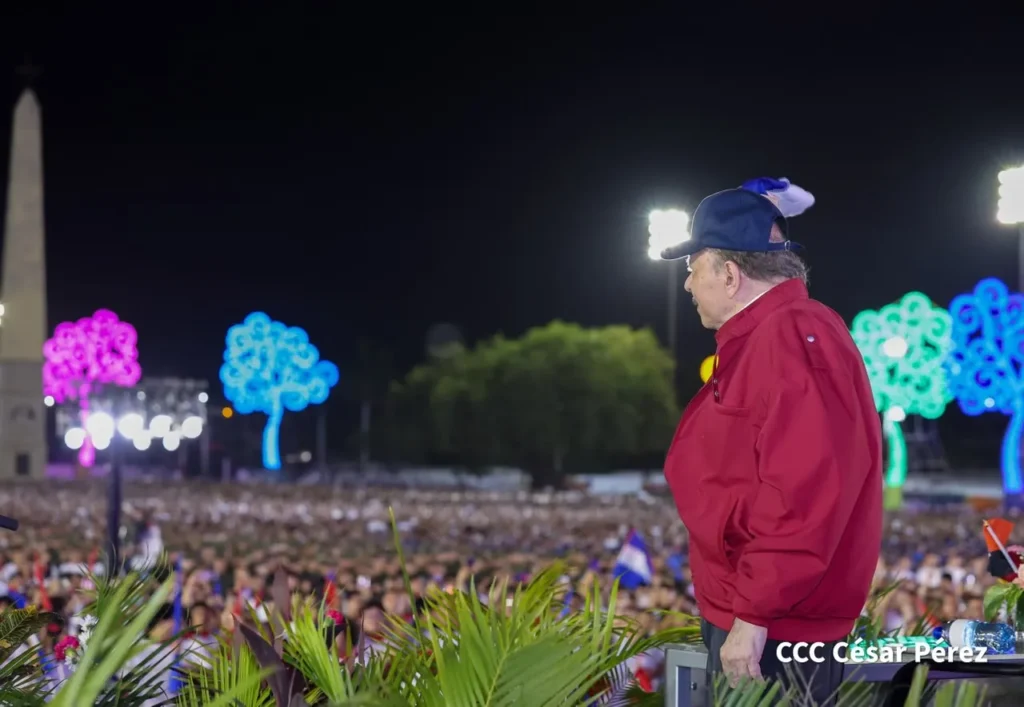
On July 19th co-president Daniel Ortega spoke openly about these threats, warning his constituents: “Just because we’re not at war, don’t think we are at peace. No! They [U.S.-backed opposition] are continuously conspiring, trying to organize political parties, so that they can put up candidates and ensure those parties win the elections,” he said.
“But they can forget that. There will no longer be elections here, there will no longer be elections here for them to capture the government and trap the people,” he continued. “And we are going to work with the National Assembly and the corresponding agencies on laws to build a wall against the coup mongers so that no matter how much money the Yankees give them, they will not succeed!”
Ortega’s words were received with thunderous applause from those listening around the country who understood that the speech proposed changes to Nicaragua’s electoral laws to curb outside interference in the country’s internal democratic processes. International media, however, immediately misquoted Ortega as having “abolished” elections altogether, and this distortion went viral, sparking a response from the U.S. State Department and its Shield of the Americas lackeys.
Consultations with the Tourism Sector
Since July 19th, a special commission of the National Assembly has drafted the proposed reforms to the constitution and is holding a series of 30 meetings with all sectors of Nicaraguan society to explain the changes and receive feedback.
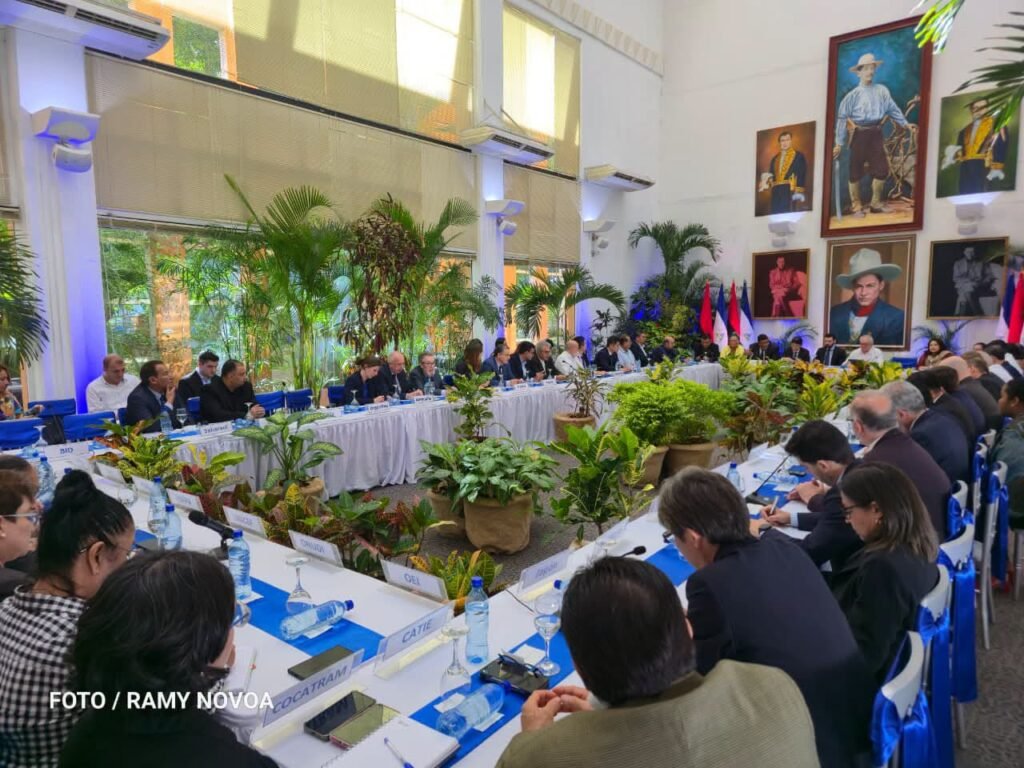
Two days after returning from Ometepe Island, I have the opportunity to take part in one of these meetings, with Nicaragua’s tourism sector. As coordinator of the Casa Ben Linder guesthouse and study tours, I join other tour operators, hotel owners and travel agency reps filling up a meeting room in Nicaragua’s tallest building – 14 stories – to seek clarification and reassurance of stability from the government.
“We will still have democratic elections,” National Assembly President Dr. Gustavo Porras assures our assembled group, explaining that there are three essential elements to the proposed changes. “[W]e need stability so that our businesses can grow and our jobs can be secured. To develop the country, we need security. For there to be stability, there must be peace.”
Proposed Reforms
Porras explains the reforms in a straightforward manner. There are six changes being proposed, the three fundamental ones are as follows:
1) Anyone who has been convicted of treason, participated in a coup attempt, participated in actions that threaten Nicaragua’s self-determination or sovereignty, violated the principles of the constitution, or has requested military intervention or economic blockades from foreign countries will not be eligible for elected office, nor to be appointed to public office.
2) Political parties receiving foreign financing or whose candidates receive foreign funding will have their legal status revoked.
3). Elections will take place every seven years and the next Presidential and National Assembly elections will take place in 2028.
The other proposed changes amount to housekeeping: clarifying that municipal and regional elections will also take place every seven years with the next elections being 2029 and 2030 respectively; and that those who were elected or appointed for periods of six years will stay in their positions for an extra year. There is also a proposed date change to hold the inauguration on the 18th of January (instead of 10 January) in order to coincide with the birthday of Nicaragua’s national poet, Rubén Darío.
“Elections are just a small part of democracy,” Porras elaborates. “Ours are the most democratic: they’re universal, direct, secret, and so on. Some countries use electoral colleges — those aren’t as democratic, with less direct participation. Others use the parliamentary system where members of parliament elect the head of state. These systems are all democratic, each with its own model.”
Recovery Requires Protection
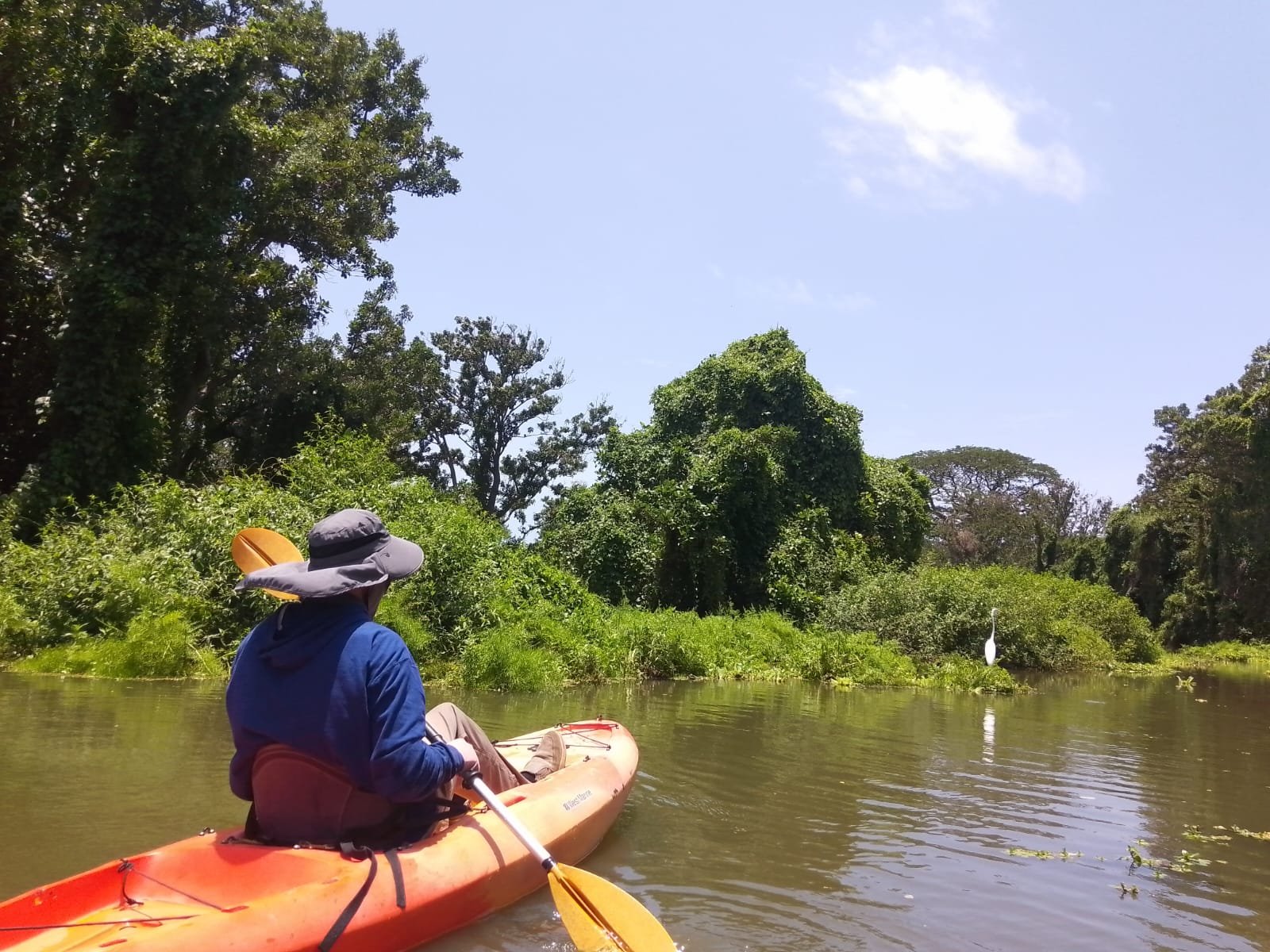
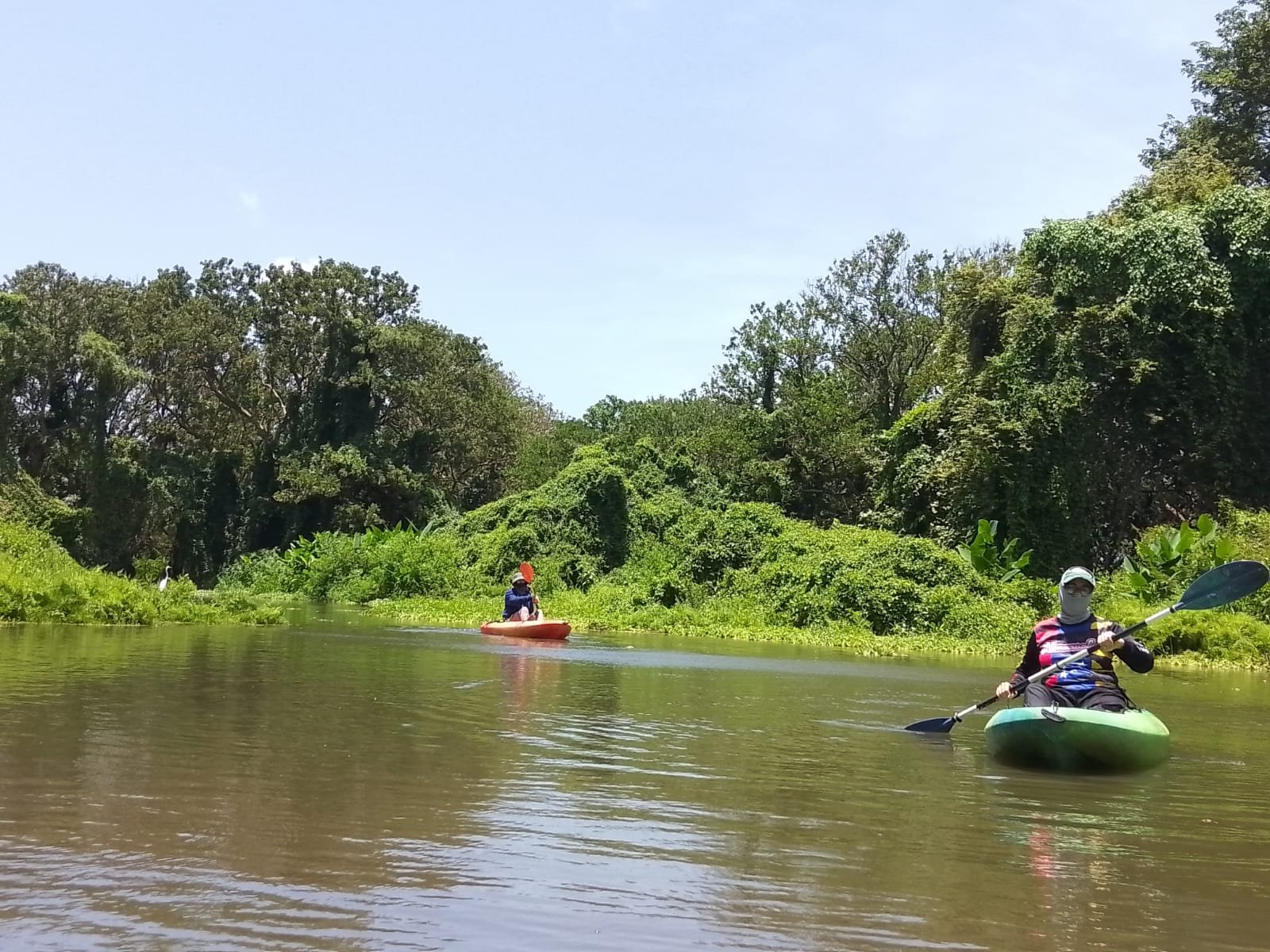
Back on Ometepe the previous weekend, we are paddling kayaks up the Río Istián between Ometepe’s two volcanic peaks, when Argeñal points out a submersed caiman, with just the snout showing out of the water. Then another, and another, and then one about three feet long perched on top of bushes, sunning itself with its jaws wide open. In all, we see 15 caimans during our paddle.
“Twenty years ago, I was here on this river working on an environmental survey to apply to make this a protected reserve, and it was uncommon to see caimans at all,” he explains. “We ran into men with firearms who were hunting caimans for their skins. Thanks to God, our application was granted and all hunting of caimans was prohibited.”
Argeñal explains that, as a result of the responsible tourism industry, islanders now clearly see the economic benefit to their families and communities of looking after the environment, a win-win for Ometepe’s people and its biodiversity.
“Today, you can see how the fauna has recovered,” he says.
Like the caimans of the Río Istián, Nicaragua’s tourism industry is recovering, but needs to continue to be protected from outside threats. The country’s government understands that every family, every community, every industry is relying on Nicaragua’s defense of its sovereignty to guarantee a better future.
In concluding the National Assembly meeting with the tourism industry, Porras explains how these essentials are linked.
“Without peace, there is no stability; without security, there is no stability and no peace. Therefore, the goal of these elements is to help our country move forward in the fight against poverty.”
Becca Renk Foster is originally from Idaho, USA. For 25 years, she has lived and worked in sustainable community development in Nicaragua. She coordinates the work of Casa Benjamin Linder in Managua and is part of the Nicaragua Solidarity Coalition.